Medically referenced. This article draws on the official blood pressure categories published by the American Heart Association and Mayo Clinic. It is not medical advice.
Nearly half of American adults have high blood pressure — and a striking number don’t know it, because it almost never announces itself with symptoms. It’s been called the “silent” condition for exactly that reason. Which makes the two numbers on a blood pressure reading some of the most useful health information you can learn to interpret. Once you understand what they mean, a cuff reading stops being a mystery and becomes a dashboard.
Let’s decode it, using the categories defined by the American Heart Association.
What the Two Numbers Actually Measure
A blood pressure reading is written as one number over another — say, 120/80. They measure two different moments in every heartbeat.
The top number (systolic) is the pressure in your arteries the instant your heart beats and pushes blood out. The bottom number (diastolic) is the pressure while your heart rests between beats.[1] Think of it as the peak and the valley of the same wave. Both matter, and either one being too high counts.
The Categories, Decoded
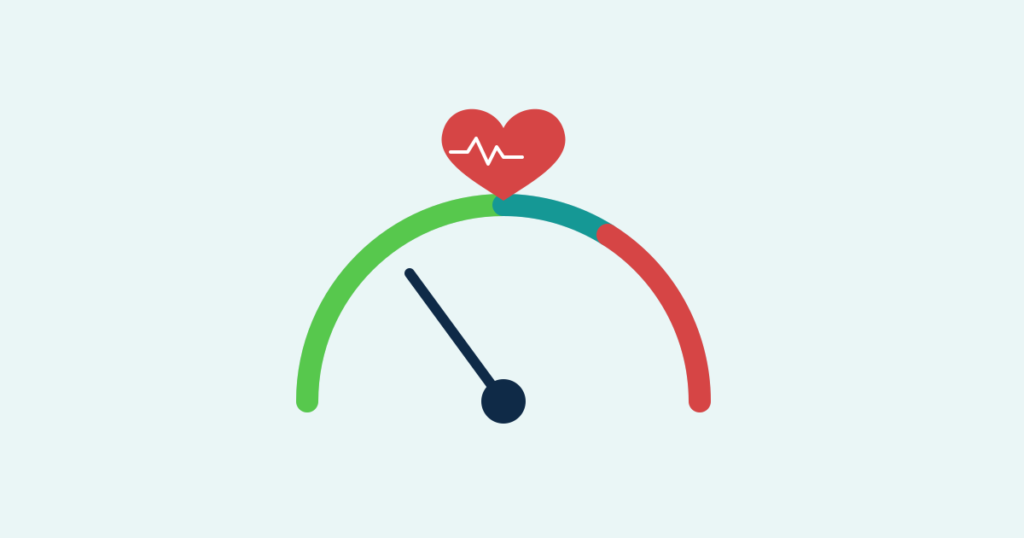
Here’s where any given reading falls, according to the American Heart Association:[2]
- Normal: less than 120 systolic and less than 80 diastolic. This is the target.
- Elevated: 120–129 systolic and less than 80 diastolic. Not high yet — but a signal to pay attention, because it tends to progress if ignored.
- Stage 1 Hypertension: 130–139 systolic or 80–89 diastolic.
- Stage 2 Hypertension: 140 or higher systolic or 90 or higher diastolic.
- Hypertensive Crisis: higher than 180 systolic and/or higher than 120 diastolic. This needs immediate medical attention.
Notice the word “or” in the hypertension stages. You don’t need both numbers to be high — one is enough to place you in that category. That’s a detail people frequently get wrong.
Why 120/80 Is the Reference Point
That familiar reading marks the exact threshold between normal and elevated.[2] It’s not a magic number so much as a line in the sand: stay under both figures, and your arteries are handling pressure well. Drift above, and the walls of your arteries are working harder than they should — over years, that extra strain is what quietly raises the risk of heart attack, stroke, and kidney damage.
How to Get a Reading You Can Trust
A single number in a doctor’s office can mislead — nerves alone can spike it (the well-known “white coat” effect). A few habits give you a truer picture:
- Sit quietly for five minutes first, feet flat on the floor, back supported, arm resting at heart level.
- Avoid caffeine, exercise, and smoking for 30 minutes before measuring.
- Take two or three readings a minute apart and record the average, at the same time each day.
- Track the trend, not the single number. One high reading isn’t a diagnosis; a consistent pattern is what matters.
The Levers That Move the Numbers
Blood pressure responds to daily habits more than almost any other vital sign. The most evidence-backed levers: reducing sodium, staying physically active, maintaining a healthy weight, limiting alcohol, and managing stress. Many of these overlap directly with the habits that support healthy blood sugar — which is why the two so often improve together.
If your readings consistently land in Stage 1 or above, that’s a conversation to have with your doctor rather than a problem to solve alone — especially before making changes to any medication. But learning to read your own numbers is the first step from passenger to driver.
For more on the daily habits that protect your whole metabolic picture, see our guide to what the evidence supports.
This article is for informational purposes only and is not a substitute for professional medical advice. Always consult a qualified healthcare provider about blood pressure readings and treatment.
References
- American Heart Association. “Blood pressure: What do the numbers mean and why do they matter?” heart.org
- American Heart Association. “Understanding Blood Pressure Readings.” heart.org