📚 Part of our Blood Sugar Guide — an evidence-based guide.
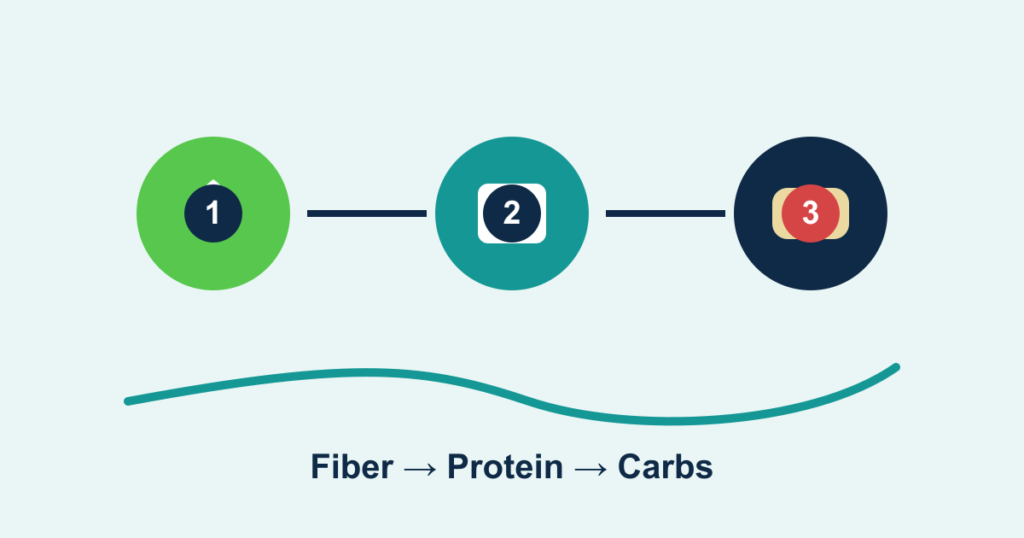
Here is something that sounds too simple to matter: you can eat the exact same meal, with the exact same calories and the exact same carbohydrates, and end up with a very different blood sugar response — just by changing the order you put the food in your mouth. Vegetables and protein first, starch and sugar last. Same plate, calmer curve.
It isn’t folk wisdom. A December 2025 study in Drug Discoveries & Therapeutics tracked people’s glucose continuously and confirmed that eating dietary fiber or protein before carbohydrates measurably blunted the post-meal rise in interstitial glucose — the same nutrient-sequencing effect that a growing line of research has been building for years.
Why the sequence matters
When carbohydrates hit an empty stomach first, they break down into glucose quickly and flood the bloodstream in a sharp wave. Your pancreas answers with a burst of insulin to clear it. Repeat that spike-and-crash cycle several times a day, every day, and you’re asking your metabolism to keep sprinting.
Front-loading fiber and protein changes the physics of the meal. Fiber forms a viscous layer that physically slows how fast the stomach empties and how quickly enzymes can reach the starch. Protein and fat trigger gut hormones — including GLP-1, the same pathway today’s weight-loss drugs imitate — that further slow gastric emptying and prompt a smoother, better-timed insulin response. The carbohydrates still get digested; they just arrive as a gentle tide instead of a flash flood.
What this looks like at the table
You don’t need a new diet, an app, or a single dollar of supplements. You need a habit:
- Start with the salad or the vegetables. The fiber gets a head start.
- Move to the protein — the chicken, fish, eggs, beans, tofu.
- Finish with the starch and anything sweet — the rice, bread, potato, dessert.
Even a few minutes of separation seems to help. So does the close cousin of this strategy: a short walk after eating, which lets your muscles pull glucose out of the blood without needing extra insulin. If that mechanism interests you, we cover it in how your muscles clear glucose and in the post-meal walk trial.
Who benefits — and the honest limits
Meal sequencing is most useful for people with prediabetes, type 2 diabetes, or anyone who notices energy crashes after carb-heavy meals. The effect is real but modest: it reshapes a single meal’s curve, it doesn’t replace medication, weight management, or overall diet quality. It also matters most when the meal actually contains fiber and protein to put first — a plain bagel has nothing to sequence. Think of it as one free, low-effort lever among several, not a cure.
Still, for a change that costs nothing and asks only that you eat your food in a slightly different order, the return is hard to beat.
This article is for general education and is not medical advice. Talk with your doctor before changing your diet, exercise, medication, or sleep routine, especially if you have a health condition.
References
- Modulatory effects of ingesting dietary fiber and protein before carbohydrates on postprandial interstitial glucose responses. Drug Discoveries & Therapeutics, 2025. doi.org/10.5582/ddt.2025.01099
- American Diabetes Association — Understanding carbohydrates and blood glucose. diabetes.org
- National Institute of Diabetes and Digestive and Kidney Diseases — Diabetes diet and eating. niddk.nih.gov
Frequently asked questions
Does the order you eat food really affect blood sugar?
Yes. Multiple studies show that eating fiber and protein before carbohydrates blunts the post-meal glucose spike compared with eating the same foods in the reverse order.
What should I eat first to lower my blood sugar spike?
Start with vegetables or other fiber, then protein, and save starches and sweets for last. Even a few minutes of separation appears to help.
Does meal sequencing replace diabetes medication?
No. It's a helpful, free habit that reshapes a single meal's glucose curve, but it doesn't replace medication, weight management, or overall diet quality.