📚 Part of our Heart Health Guide — an evidence-based guide.
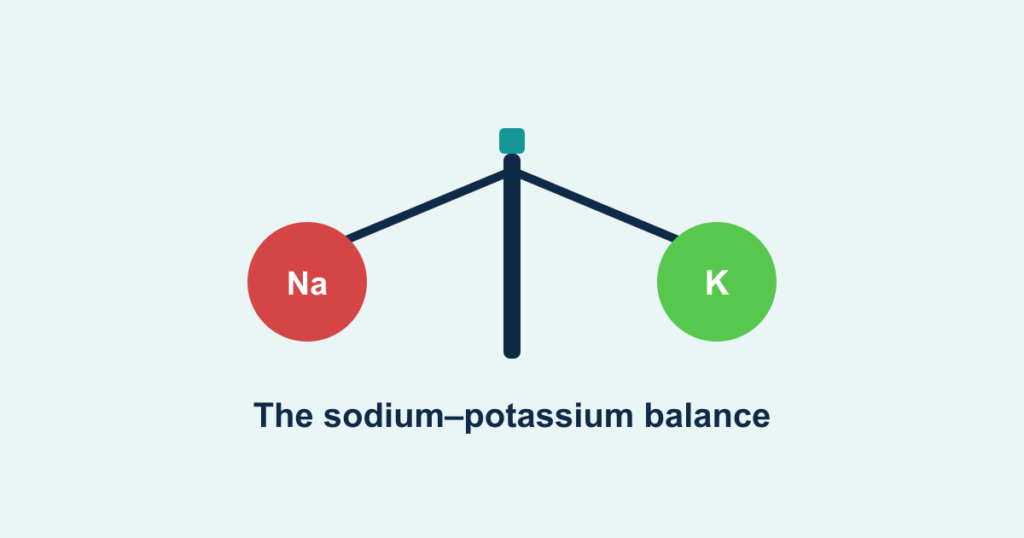
Blood pressure advice has focused on sodium for decades. That focus is not wrong, but it is half the picture — and the half that gets ignored may be easier to change. What appears to matter is not sodium alone but the balance between sodium and potassium.
Why the ratio matters
Sodium and potassium work against each other in regulating fluid volume and vascular tone. Sodium promotes fluid retention and increases vascular resistance. Potassium promotes sodium excretion by the kidney, relaxes blood vessel walls and reduces the sensitivity of blood pressure to sodium.
Studies measuring both have generally found the ratio predicts cardiovascular outcomes better than either alone. Someone eating high sodium and high potassium is in a different position from someone eating high sodium and almost no potassium.
The evolutionary framing is often cited: ancestral diets are estimated to have delivered far more potassium than sodium, while the modern pattern reverses it. That is a plausible narrative built on indirect reconstruction — useful as intuition, not as evidence.
Where most people actually stand
US adults typically consume around 3,400 mg of sodium daily against a recommended limit of 2,300, while potassium intake is commonly around 2,300–2,600 mg against an adequate intake of roughly 2,600 for women and 3,400 for men.
So the ratio sits near or below 1:1, when something closer to 2:1 or 3:1 in favour of potassium would be more favourable. Most people are short on potassium and long on sodium simultaneously.
A relevant point about where sodium comes from: the majority is not from the salt shaker but from packaged and restaurant food — bread, deli meat, cheese, sauces, soups, prepared meals. Cooking at home changes the number more than putting the shaker away does.
The evidence
Potassium supplementation trials show blood pressure reductions of roughly 3–5 mmHg systolic, with larger effects in people with hypertension and high sodium intake.
The most striking result comes from salt substitution. A large trial in rural China replaced regular salt with a 75% sodium chloride / 25% potassium chloride substitute in over 20,000 people with stroke history or high blood pressure. It found significant reductions in stroke, major cardiovascular events and death.
This is a genuinely strong outcome trial, and it is worth noting its population: older adults at high cardiovascular risk, with normal kidney function, in a setting where most salt was added during home cooking. Whether the same benefit transfers to a population eating mostly packaged food, where you cannot substitute the salt you never handle, is not established.
Where to get potassium
Bananas are the reflex answer and not especially good. Better sources per serving: potatoes with skin, sweet potatoes, beans and lentils, spinach and leafy greens, avocado, tomato products, yogurt, salmon, dried apricots, coconut water and squash.
Food sources are preferable to supplements, which are legally limited to small doses in the US precisely because potassium can be dangerous in bulk.
This overlaps almost entirely with the DASH pattern, which was designed around exactly this principle (the full approach).
The safety point that matters
Potassium is one of the few nutrients where more is genuinely dangerous for some people. High potassium (hyperkalaemia) can cause fatal cardiac arrhythmia.
Do not use potassium-based salt substitutes or supplements without medical advice if you have chronic kidney disease, or take ACE inhibitors, ARBs, potassium-sparing diuretics such as spironolactone, or NSAIDs regularly. These are extremely common medications, which makes this warning more relevant than it sounds.
When to see a doctor
See a doctor if home readings are consistently 130/80 or above, and before using salt substitutes if you take any of the medications above or have reduced kidney function — a simple blood test settles it. Seek emergency care for readings above 180/120 with chest pain, breathlessness, severe headache, vision change or one-sided weakness, and for palpitations with weakness or fainting.
The honest bottom line
The sodium-to-potassium ratio predicts cardiovascular risk better than sodium alone, and most people are wrong on both sides of it. Raising potassium through food is a real, well-evidenced lever worth 3–5 mmHg. Salt substitution has a strong outcome trial behind it in a specific population — and is genuinely unsafe for people with kidney disease or on very common blood pressure medications. Check before you switch.
Frequently asked questions
Does potassium lower blood pressure?
Yes, for many people. Potassium helps blood vessels relax and helps the kidneys excrete sodium, and a higher potassium intake is linked to lower blood pressure.
What foods are highest in potassium?
Beans and lentils, potatoes and sweet potatoes, leafy greens, avocados, yogurt, bananas, and many fruits and vegetables are rich sources.
Can I take potassium supplements for blood pressure?
Be careful. Too much potassium is dangerous for people with kidney disease or on certain blood pressure medications. Get potassium from food unless your doctor advises a supplement.