📚 Part of our Weight Loss Guide — an evidence-based guide.
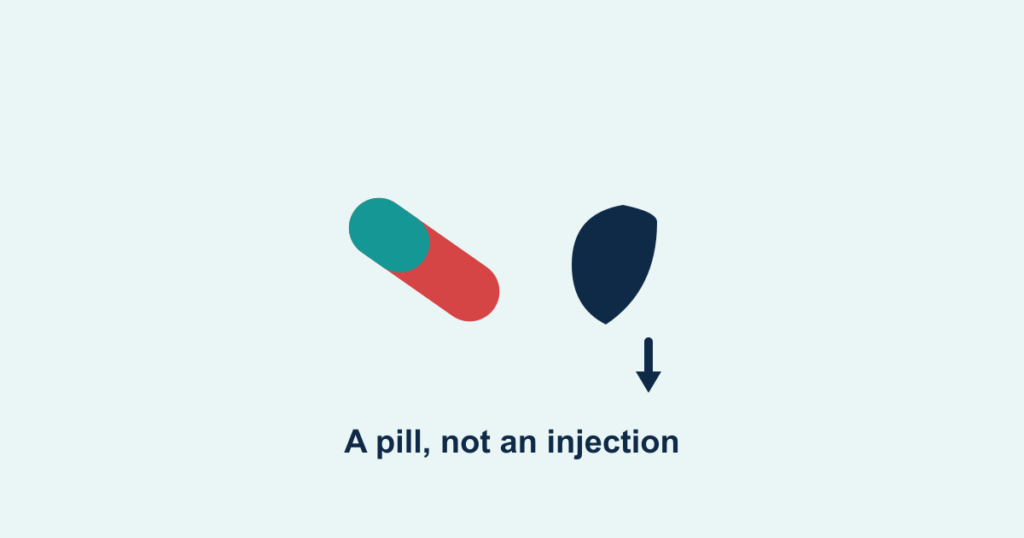
Until recently, GLP-1 medications for weight loss meant weekly injections. An oral version changes the practical picture for a lot of people — but the pill is not simply the injection in tablet form, and the differences matter.
What GLP-1 drugs do
GLP-1 is a hormone released by the gut after eating. It stimulates insulin release when glucose is high, suppresses glucagon, slows gastric emptying, and acts on appetite centres in the brain.
GLP-1 receptor agonists mimic it at pharmacological doses. The result for most people is markedly reduced appetite and reduced “food noise” — the persistent background preoccupation with eating that many patients describe disappearing entirely.
The oral options
Two distinct things are called oral GLP-1s, and conflating them causes confusion.
Oral semaglutide is the same peptide as the injection, made absorbable by pairing it with an absorption enhancer. Because peptides are destroyed by digestion, absorption is low and highly sensitive to conditions — which is why it must be taken on an empty stomach with no more than about 4 oz of plain water, and nothing else for at least 30 minutes. Deviating from that meaningfully reduces the dose you actually absorb.
Small-molecule oral GLP-1 agonists such as orforglipron are chemically different — not peptides at all — which means no absorption enhancer, no food and water restrictions, and simpler manufacturing. That last point matters at scale: peptide manufacturing capacity has been a real constraint on supply.
How well they work
Trial results place oral options broadly in the range of high single-digit to mid-teens percentage weight loss, varying by drug, dose and duration — generally somewhat less than high-dose tirzepatide injection, and in a comparable range to semaglutide injection at the higher oral doses.
Two honest caveats. Cross-trial comparisons are unreliable, since populations and durations differ. And weight regain after stopping is well documented across this drug class — the STEP 1 extension found participants regained roughly two-thirds of lost weight within a year of stopping. These are treatments for a chronic condition, not a course of therapy.
Side effects and who should not take them
The common ones are gastrointestinal: nausea, vomiting, diarrhoea, constipation. They are dose-related, worst during dose escalation, and improve for most people. Slower titration is the usual answer.
Less common but serious: pancreatitis, gallbladder disease (more likely with rapid weight loss), and in people with existing retinopathy, a risk of worsening with rapid glucose improvement.
Contraindicated with a personal or family history of medullary thyroid carcinoma or MEN2, based on rodent data. Not for use in pregnancy, and effective contraception is advised.
Muscle loss deserves more attention than it gets. A substantial share of weight lost on these drugs is lean mass. Adequate protein and resistance training are not optional additions — they determine what you are left with (how much protein).
Why an oral version matters anyway
Needle aversion is a real barrier. Pills are easier to distribute and store. Small-molecule versions sidestep the peptide manufacturing bottleneck, and competition tends to lower prices — cost and insurance coverage remain the main obstacle for most people, not efficacy.
Beyond weight, this class has shown cardiovascular, kidney and other benefits in trials (what else they do).
When to see a doctor
These are prescription medications requiring medical supervision — never use compounded or online-sourced versions of uncertain provenance, which have caused documented dosing errors and hospitalisations. Seek urgent care for severe persistent abdominal pain radiating to the back with vomiting, which can indicate pancreatitis. Contact your doctor for severe upper right abdominal pain, persistent vomiting, or signs of dehydration.
The honest bottom line
Oral GLP-1s work, with results broadly comparable to injections though generally below the strongest injectable. Oral semaglutide has strict empty-stomach dosing rules that materially affect absorption; small-molecule versions do not, and are easier to manufacture at scale. Weight regain after stopping is the rule, not the exception, and protecting muscle with protein and resistance training is part of the treatment, not an optional extra.
Frequently asked questions
Is there a weight-loss pill like Ozempic?
Oral GLP-1 medications are in development and early trials. Today's most powerful GLP-1 drugs are injections, but small-molecule pill versions are being tested and could expand access.
Are oral GLP-1 drugs available yet?
Some are in late development and early-stage trials. Availability depends on ongoing studies and regulatory approval, so they aren't broadly available for weight loss yet.
Do you still need diet and exercise on GLP-1 drugs?
Yes. These drugs work best alongside dietary changes and activity, and protecting muscle with adequate protein and strength training remains important.