📚 Part of our Heart Health Guide — an evidence-based guide.
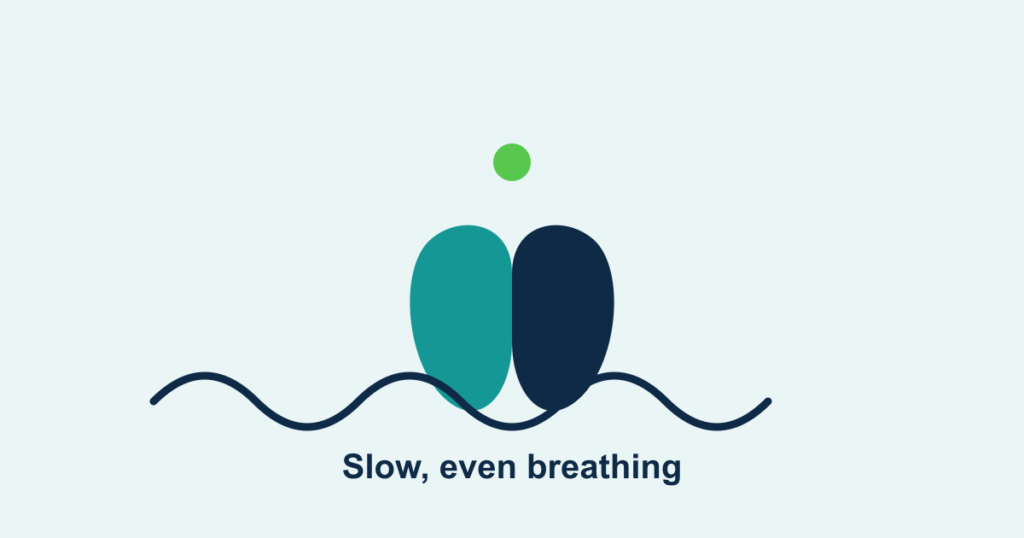
Here’s a health intervention with no cost, no side effects, and no prescription — and a surprising amount of evidence behind it: slowing your breathing down. Drop from your usual 12–18 breaths a minute to around 6, for a few minutes a day, and your blood pressure can measurably fall. The body has a built-in calm switch, and breath is the handle.
A 2025 study in Global Advances in Integrative Medicine and Health tracked people doing yoga-based slow-breathing exercises over 12 weeks and documented reductions in blood pressure alongside shifts in the autonomic nervous system — the automatic controls that govern heart rate and vessel tension. It builds on a well-established acute effect: slow breathing calms the “fight-or-flight” branch of your nervous system almost immediately.
Why the breath talks to your blood pressure
Your nervous system has two modes: sympathetic (stress, speed up) and parasympathetic (rest, slow down). Fast, shallow breathing nudges you toward the stress side, tightening blood vessels and raising pressure. Slow, deep breathing does the opposite — it stimulates the vagus nerve, the main cable of the calming system, which relaxes blood vessels and steadies the heart. Around six breaths per minute appears to be a sweet spot where the rhythm of your breath and the natural rhythm of your circulation line up, amplifying the effect.
How to do it
- Breathe in gently through your nose for about 4–5 seconds.
- Breathe out slowly for about 5–6 seconds — a longer exhale than inhale is what flips on the calming response.
- That’s roughly one breath every 10 seconds — six per minute.
- Do it for 5–10 minutes a day. Sitting comfortably, shoulders loose, belly moving more than your chest.
Because breath, stress, and blood sugar are all wired to the same nervous system, this same practice tends to ripple outward — we cover that overlap in how stress raises blood sugar and blood pressure at once. And if you’re tracking your numbers, it helps to know what your blood pressure readings actually mean.
The honest caveat
Slow breathing is a helpful add-on, not a cure. The blood-pressure drops in studies are real but generally modest, and they don’t replace medication, exercise, weight management, or cutting back on excess sodium. If you take blood pressure medicine, keep taking it and keep your doctor in the loop. But as a free daily habit that also lowers stress and improves sleep, few things offer more return for less effort than simply breathing slower.
This article is for general education and is not medical advice. Talk with your doctor before changing your diet, exercise, medication, or sleep routine, especially if you have a health condition.
References
- Blood Pressure and Autonomic Changes From 12-Weeks of Yoga-Based Slow Breathing Exercises. Global Advances in Integrative Medicine and Health, 2025. doi.org/10.1177/27536130251380265
- American Heart Association — Managing stress to control high blood pressure. heart.org
- National Center for Complementary and Integrative Health — Relaxation techniques. nccih.nih.gov
Frequently asked questions
How does slow breathing lower blood pressure?
Slow breathing activates the vagus nerve and the body's calming nervous system, which relaxes blood vessels and steadies the heart, gently lowering blood pressure.
How many breaths per minute is best?
Around six breaths per minute — roughly a 4-5 second inhale and a longer 5-6 second exhale — appears to be a sweet spot for the blood-pressure effect.
Can breathing replace blood pressure medication?
No. The reductions are real but modest, and slow breathing is an add-on to medication, exercise, and diet — never a replacement. Keep your doctor informed.