📚 Part of our Blood Sugar Guide — an evidence-based guide.
They share a name, a diagnostic test, and a symptom list — and beyond that they are genuinely different diseases. One is an autoimmune condition that destroys the cells making your insulin. The other is a metabolic condition in which your body makes insulin but stops responding to it properly. Confusing them leads to real harm: misplaced blame, delayed diagnosis, and advice that fits one and not the other.
The core difference in one paragraph
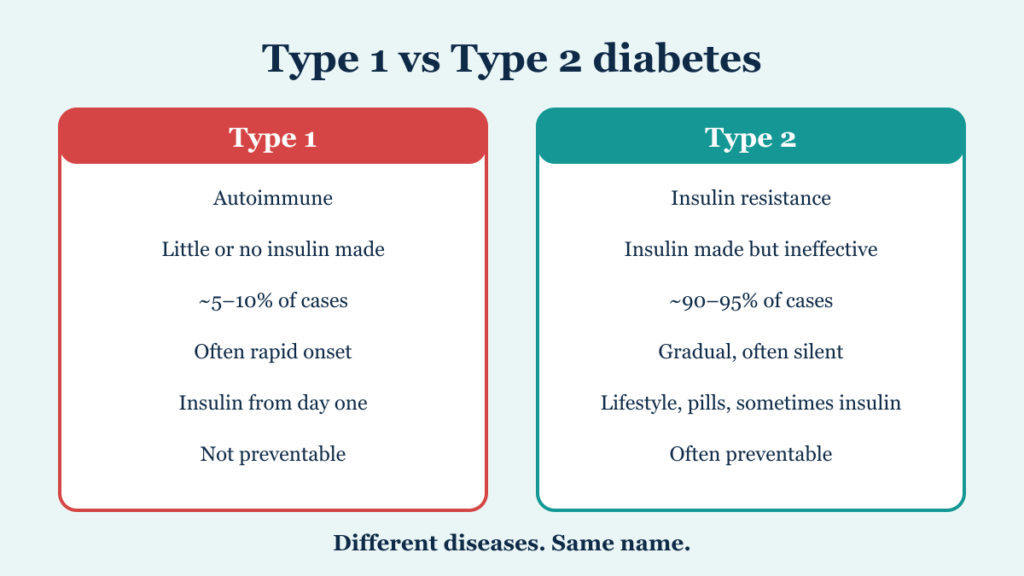
In type 1 diabetes, the immune system mistakenly destroys the beta cells of the pancreas — the cells that produce insulin. The result is a body that makes little or no insulin at all. Insulin must be replaced from the outside, permanently, from the moment of diagnosis.
In type 2 diabetes, the pancreas still makes insulin, sometimes a great deal of it, but the body’s cells respond to it poorly. Over time the pancreas cannot keep up with the extra demand and output declines. The underlying problem is insulin resistance.
One is a supply problem. The other starts as a demand problem and becomes a supply problem later.
Who gets each, and when
Type 2 accounts for roughly 90 to 95% of all diabetes. Type 1 makes up most of the remainder.
The old shorthand — type 1 is “juvenile” diabetes, type 2 is “adult-onset” — has been abandoned because it is wrong often enough to be dangerous. Type 1 is frequently diagnosed in childhood or adolescence, but it can appear at any age; a slower-developing adult form exists and is regularly mistaken for type 2 at first. Meanwhile, type 2 is now diagnosed in adolescents and young adults with rising frequency.
Age is a clue, not a diagnosis.
How they announce themselves
The classic symptoms overlap because both produce high blood glucose: excessive thirst, frequent urination, fatigue, and blurred vision. What differs is the speed and the accompanying signs.
Type 1 typically develops quickly — over weeks, sometimes days. Unintended weight loss is common and often striking, because without insulin the body cannot use glucose and begins breaking down fat and muscle for fuel. If it goes unrecognized, it can progress to diabetic ketoacidosis, a medical emergency.
Type 2 develops slowly and quietly, frequently over years. Many people have no symptoms at all until a routine blood test finds it, which is why so much of it is caught late — and why the early warning signs are worth knowing. It is usually preceded by prediabetes, which is itself often silent.
What causes them — and what does not
This is where the most damaging myth lives, so let us be direct: eating sugar does not cause type 1 diabetes. Type 1 is an autoimmune process, driven by genetic susceptibility plus environmental triggers that are still being worked out. Nothing a child or parent did caused it, and nothing they could have done would have prevented it.
Type 2 is different. Genetics matter substantially — family history is one of the strongest risk factors — but so do excess weight (particularly around the abdomen), physical inactivity, age, and certain ethnic backgrounds. That combination is why type 2 is often preventable, and it is also why blaming individuals for it is only ever half the story.
How they are treated
People with type 1 require insulin for life, delivered by injection or pump, matched to food, activity and illness. It is a demanding, continuous balancing act. Diet and exercise matter a great deal for health, but they are never a substitute for insulin.
People with type 2 have a wider set of options. Dietary change, physical activity, and weight loss can be genuinely powerful, sometimes enough to bring blood glucose back into the normal range. Metformin and other oral medications are common, and GLP-1 drugs have changed what is achievable for many (what to know). Some people with type 2 eventually need insulin too — which is a reflection of the disease progressing, not a personal failure.
Can either be reversed?
Type 1: no. The insulin-producing cells are gone, and no lifestyle change brings them back. This matters because people with type 1 are routinely targeted by claims that diet or supplements can cure them, and acting on that advice can be fatal. The genuine scientific progress here is coming from stem-cell research, not from diet — see what the stem-cell breakthrough really means.
Type 2: sometimes. Substantial weight loss can put type 2 diabetes into remission, meaning normal blood glucose without medication. Remission is real, it is more likely the earlier it is attempted, and it is not the same as cure — the tendency remains, and weight regain commonly brings the condition back.
How doctors tell them apart
The diagnostic tests for diabetes itself — fasting glucose, A1C, oral glucose tolerance — confirm that blood sugar is high, but they do not distinguish the type. When it is unclear, two additional tests do most of the work: autoantibody testing (antibodies against the body’s own beta cells indicate type 1) and C-peptide, which reflects how much insulin your own pancreas is still producing.
This matters practically. An adult diagnosed with type 2 who is lean, has a personal or family history of autoimmune disease, or fails to respond to standard treatment is a reasonable candidate for antibody testing. Getting the type wrong delays insulin in people who need it.
What about gestational diabetes?
A third form appears during pregnancy, when hormones increase insulin resistance beyond what the pancreas can compensate for. It usually resolves after delivery, but it is an important signal: it substantially raises the risk of developing type 2 diabetes later, which makes ongoing screening worthwhile rather than optional.
When to seek care urgently
Get emergency care for vomiting that will not stop, deep or rapid breathing, breath that smells fruity or sweet, severe abdominal pain, confusion, or drowsiness alongside high blood sugar — these suggest diabetic ketoacidosis, which develops fastest in type 1 and is life-threatening.
Book a prompt appointment for excessive thirst, frequent urination, unexplained weight loss, blurred vision, recurrent infections, or wounds that heal slowly. And ask for a fasting glucose and A1C if you have never had them, are over 45, carry weight around the middle, have a family history, or had gestational diabetes.
The honest bottom line
Type 1 is autoimmune, usually fast, requires insulin permanently, and cannot be prevented or reversed. Type 2 is driven by insulin resistance, usually slow and silent, is often preventable, and can sometimes be pushed into remission. They are not mild and severe versions of one disease — and the fastest way to give someone bad advice is to treat them as if they were.
Frequently asked questions
What is the main difference between type 1 and type 2 diabetes?
Type 1 is an autoimmune disease in which the pancreas stops producing insulin, so insulin must be replaced for life. In type 2, the pancreas still makes insulin but the body responds to it poorly, and the condition is often preventable and sometimes reversible.
Which is worse, type 1 or type 2 diabetes?
Neither is a milder version of the other. Type 1 requires lifelong insulin and constant management from diagnosis. Type 2 develops silently and is often diagnosed late, after complications have begun. Both carry serious risks when poorly controlled.
Can type 2 diabetes turn into type 1?
No. They are different diseases with different causes. People with type 2 may eventually need insulin as the pancreas declines, but that is progression of type 2, not a conversion to type 1.