📚 Part of our Weight Loss Guide — an evidence-based guide.
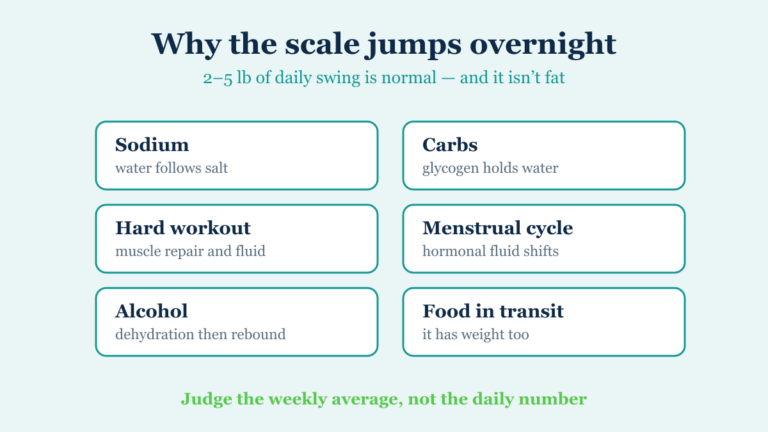
The bathroom scale has one fatal flaw: it can’t tell the difference between losing fat and losing muscle. It just reports a number falling. But your body knows the difference — and so does your metabolism, which is exactly why so many diets deliver a triumphant first month and a discouraging sixth.
When you lose weight through eating less alone, a meaningful share of what disappears is muscle, not just fat. That matters because muscle is metabolically expensive tissue: it burns calories around the clock and is the main place your body parks blood sugar. Lose it, and you lower the engine that keeps weight off — which is how the pounds so often find their way back.
The tissue that protects your results
A 2026 review in the Strength and Conditioning Journal examining fat-free mass — essentially muscle and other lean tissue — lays out how resistance training and adequate protein help the body add or hold onto lean mass rather than surrender it. The practical message is consistent with decades of exercise science: if you want fat loss that sticks, you have to give your body a reason to keep its muscle.
Resistance training is that reason. Lifting, pushing, and pulling against load signals the body that its muscle is needed, so during a calorie deficit it preferentially burns fat and spares lean tissue. The payoff compounds: more retained muscle means a higher resting metabolism, better blood sugar control, and a body that looks leaner even at the same scale weight.
It isn’t only about fat
The benefits of building strength reach well past the waistline. A 2026 network meta-analysis in Human Reproduction looking at exercise for women with PCOS found that vigorous activity combined with resistance training ranked among the most effective approaches for improving cardiometabolic health — a reminder that muscle work pays dividends across the whole system, not just on the scale.
How to actually do it
- Train each major muscle group twice a week. Legs, hips, back, chest, shoulders, arms — bodyweight, bands, or weights all work.
- Eat enough protein. Spreading protein across meals gives your body the raw material to build and defend muscle during weight loss.
- Progress gradually. Add a little resistance or a few reps over time; that steady overload is what drives change.
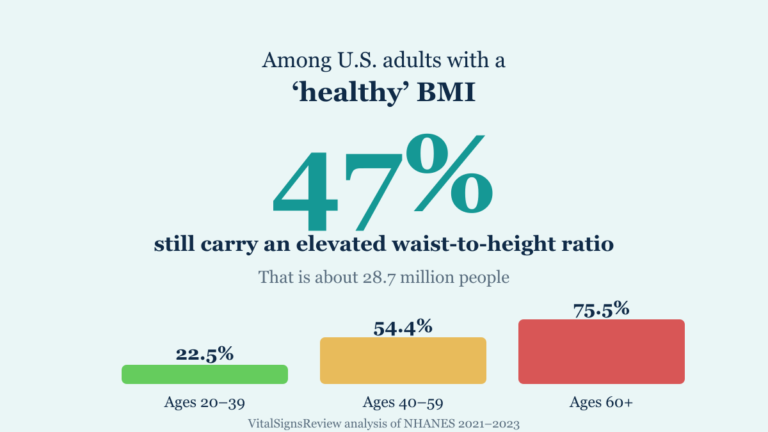
- Judge progress by more than the scale. How clothes fit, strength gains, and waist measurements often tell the real story. Waist size, in particular, is a better health signal — see why your waist beats the scale.
The honest limits
Strength training is not a license to ignore diet — fat loss still requires an overall calorie deficit, and no amount of lifting outruns a poor eating pattern. Results also take weeks to months, and if you have a heart condition or injury, get medical clearance first. But among all the levers for lasting weight control, protecting your muscle is one of the most underrated — and the scale will never tell you when you’re getting it right.
This article is for general education and is not medical advice. Talk with your doctor before changing your diet, exercise, medication, or sleep routine, especially if you have a health condition.
References
- Fat-Free Mass Accretion: Limits, Targets, and Best Practices. Strength and Conditioning Journal, 2026. doi.org/10.1519/ssc.0000000000000986
- Ranking exercise interventions for reproductive and metabolic health in women with PCOS: a comparative network meta-analysis. Human Reproduction, 2026. doi.org/10.1093/humrep/deag083.1152
- Centers for Disease Control and Prevention — Physical activity: how much do adults need? cdc.gov
Frequently asked questions
Why does the scale mislead during weight loss?
The scale can't distinguish fat from muscle. Losing weight by eating less alone often sheds muscle too, which lowers metabolism and makes weight easier to regain.
How does resistance training help fat loss last?
Lifting signals your body to keep its muscle during a calorie deficit, so more of the weight lost is fat. Retained muscle keeps your resting metabolism higher.
How often should I strength train?
Training each major muscle group about twice a week, with enough protein, is a common evidence-based target — bodyweight, bands, or weights all work.