📚 Part of our Blood Sugar Guide — an evidence-based guide.
It is one of the most confusing things about tracking blood sugar: you eat nothing for eight hours and wake up with a higher reading than when you went to bed. Nothing went in, and the number went up. Here is why, and which explanation is real and which has largely been discarded.
The main answer: the dawn phenomenon
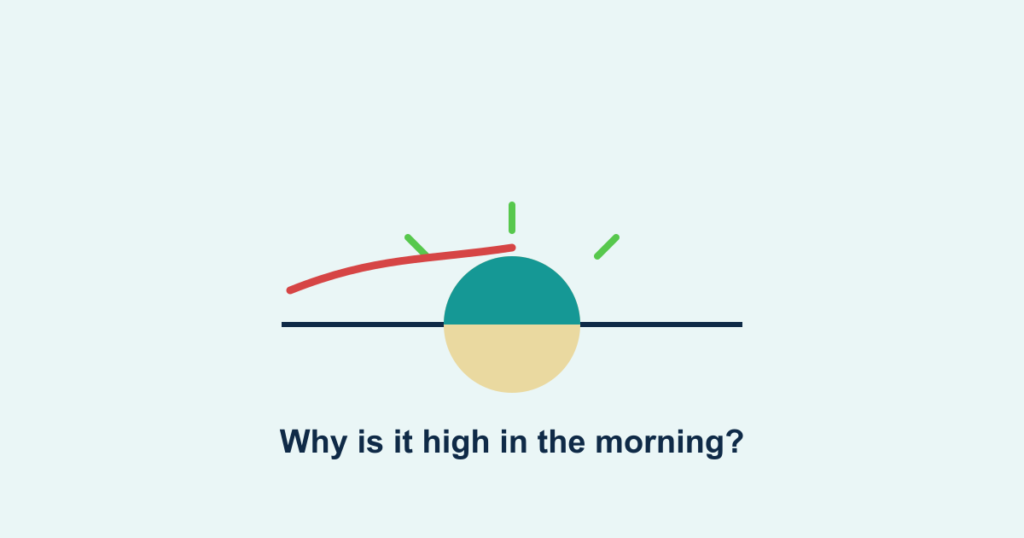
In the early hours — typically between about 3 and 8 a.m. — your body prepares to wake up by releasing a coordinated set of hormones: cortisol, growth hormone, glucagon and adrenaline.
These are counter-regulatory hormones, meaning they oppose insulin. They tell the liver to release stored glucose so you have fuel to get up and move. In someone with normal insulin sensitivity, the pancreas quietly matches this with extra insulin and glucose barely shifts.
If you have insulin resistance, that compensation is inadequate. The liver pours glucose out, insulin fails to hold it back, and you wake up high.
This is normal physiology producing an abnormal result. It is not something you did wrong the night before.
The explanation that has mostly been discarded
You will still read about the Somogyi effect — the theory that overnight low blood sugar triggers a rebound surge of counter-regulatory hormones, producing a high morning reading. The advice that followed was counterintuitive: eat more at night, or reduce evening insulin.
Studies using continuous glucose monitoring have largely failed to support it. When researchers actually watched overnight glucose, high morning readings were usually preceded by high or normal overnight glucose, not lows. Most diabetes organisations now regard rebound hyperglycaemia as uncommon at best.
This matters practically: acting on the Somogyi theory can mean reducing insulin or adding food when the real problem is the opposite. If someone advises you to eat a bedtime snack to fix morning highs, that advice is out of date unless overnight lows have actually been documented.
The other real contributors
Poor or short sleep. Sleep restriction reduces insulin sensitivity measurably, sometimes after a single bad night (the connection).
Untreated sleep apnea. This deserves special attention. Repeated overnight oxygen dips and arousals drive sympathetic activation and worsen insulin resistance directly. If your morning readings are stubbornly high and you snore loudly, gasp at night or wake unrefreshed, this is worth investigating before adjusting anything else (the warning signs).
What you ate the night before. A large, late, carbohydrate-heavy meal — particularly one high in fat, which slows gastric emptying — can still be affecting glucose many hours later.
Alcohol. Complicated in both directions. It can cause delayed lows overnight, and the food usually eaten alongside it can produce highs.
Stress. Chronic stress raises the same counter-regulatory hormones (how).
Medications, particularly corticosteroids, and timing of diabetes medication that wears off before morning.
How to work out which one it is
Guessing is the wrong approach here, and the answer changes what you should do.
The informative step is to measure overnight — either with a continuous glucose monitor, or by checking around 2 to 3 a.m. for a few nights.
- Glucose rises steadily through the early hours from a normal baseline → dawn phenomenon.
- Glucose is high all night → the evening meal, medication timing or overall insulin resistance.
- Glucose drops low then rises → the rare rebound pattern, and worth discussing urgently if you take insulin or a sulfonylurea.
If you use a monitor, this is one of the genuinely good uses for it (whether a CGM is worth it).
What actually helps
An evening walk or any post-dinner movement. Muscle pulls glucose from the blood without needing insulin, and the effect on insulin sensitivity carries into the night (the trial).
Shift the shape of dinner — more protein, fiber and vegetables, less refined starch, and earlier where possible (meal order).
Fix sleep, and rule out apnea. This is frequently the whole answer and is routinely skipped.
Reduce visceral fat. Hepatic insulin resistance is what allows the overnight glucose release to go unchecked, and modest weight loss improves it (the full protocol).
Do not eat a bedtime snack to fix it unless overnight lows have been documented. It is intuitive, widely repeated and usually counterproductive.
When to see a doctor
Bring morning readings to your doctor if they are consistently above your target, and take the overnight data with you — it changes the recommendation. Never adjust insulin or diabetes medication doses on your own based on morning readings alone.
Seek urgent care for readings above 250 mg/dL with vomiting, deep or rapid breathing, fruity-smelling breath, abdominal pain or confusion. And if you take insulin or a sulfonylurea and wake with headaches, night sweats or nightmares, mention overnight hypoglycaemia specifically.
The honest bottom line
Morning highs are usually the dawn phenomenon: a normal pre-waking hormone surge that pushes the liver to release glucose, which insulin resistance fails to contain. The rebound theory you may have read about is largely unsupported by continuous monitoring data, and acting on it can make things worse. Measure overnight rather than guessing, look hard at sleep and apnea, and put movement after dinner — not a snack before bed.
Frequently asked questions
What is the dawn phenomenon?
It's a natural early-morning rise in blood sugar — roughly between 4 and 8 a.m. — driven by hormones like cortisol and growth hormone that prepare your body to wake up. It happens to everyone, but it's more pronounced in people with diabetes.
Why is my blood sugar high in the morning even though I didn't eat?
Because the rise is hormonal, not from food. Your liver releases glucose overnight and morning hormones raise it further, so fasting blood sugar can be higher than expected even without eating.
How do I lower morning blood sugar?
Try an earlier, lighter dinner with protein and fiber, an evening walk, good sleep, and limiting late-night snacks. If you have diabetes, talk to your doctor about medication type and timing.