📚 Part of our Weight Loss Guide — an evidence-based guide.
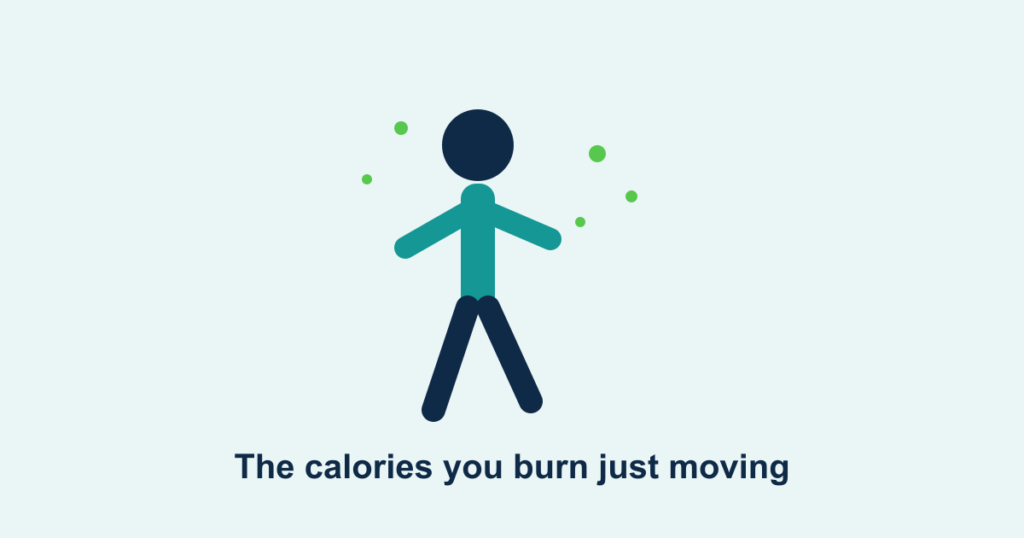
Two people eat the same, weigh the same, and do the same 45-minute workout. One stays lean; the other slowly gains. The hidden difference often isn’t the gym at all — it’s everything they do in the other 23 hours. Scientists have a name for it: NEAT, or non-exercise activity thermogenesis — the calories you burn fidgeting, pacing, standing, taking the stairs, carrying groceries, and generally not sitting still.
NEAT can vary by hundreds of calories a day between two similar people, which over a year is the difference between steady weight and creeping gain. And here’s the twist recent research keeps highlighting: your body quietly defends its energy balance in ways that can undercut your workout.
The compensation trap
A 2024 study in Medicine & Science in Sports & Exercise found that after vigorous exercise, people unconsciously moved less for the rest of the day — their non-exercise activity and even body temperature dropped — a pattern linked to weight gain. In other words, a hard gym session can trick your body into being a couch potato afterward, quietly clawing back some of the calories you just burned. A 2026 study in the European Journal of Applied Physiology in older women likewise found that how training was structured changed how much incidental daily movement they did.
This is why exercise alone so often disappoints on the scale — not because it doesn’t work, but because the body compensates elsewhere. The people who stay lean tend to be the ones who keep moving all day long, not just for one intense hour.
How to raise your NEAT
- Break up sitting. Stand or walk a couple of minutes every half hour — set a reminder if you need one.
- Take the inefficient path. Stairs over elevator, the far parking spot, a walking phone call.
- Stand when you can. On calls, while reading, during TV ads.
- Do your own chores. Cooking, cleaning, yard work and carrying all add up.
- Watch the post-workout slump. After exercising, resist the urge to be totally sedentary the rest of the day.
It’s the same reason a modest step target beats an all-or-nothing mindset — see how many steps you actually need — and why protecting muscle matters for fat loss that lasts.
The honest caveat
NEAT is powerful but not magic: it works alongside diet quality and structured exercise, not instead of them, and individual differences in metabolism are real. You can’t fidget your way out of a poor diet. But for anyone who feels their workouts aren’t translating to results, the fix may not be a harder gym session — it may be simply moving more, more often, throughout the ordinary day.
This article is for general education and is not medical advice. Talk with your doctor before changing your diet, exercise, medication, or sleep routine, especially if you have a health condition.
References
- Acute Vigorous Exercise Decreases Subsequent Nonexercise Physical Activity and Body Temperature Linked to Weight Gain. Medicine & Science in Sports & Exercise, 2024. doi.org/10.1249/mss.0000000000003487
- Frequency-dependent adaptations in energy expenditure, strength, mood, and inflammation following combined training in older women. European Journal of Applied Physiology, 2026. doi.org/10.1007/s00421-026-06161-5
- Centers for Disease Control and Prevention — Adults: how much physical activity do you need? cdc.gov
Frequently asked questions
What is NEAT?
NEAT stands for non-exercise activity thermogenesis — the calories you burn through everyday movement like walking, standing, fidgeting, chores, and taking the stairs.
Why don't my workouts lead to weight loss?
Your body can compensate: after hard exercise, people often unconsciously move less the rest of the day, clawing back some of the calories burned. Staying active all day matters.
How can I increase my NEAT?
Break up sitting every half hour, take the stairs, stand during calls, do your own chores, and avoid being totally sedentary after a workout.