📚 Part of our Weight Loss Guide — an evidence-based guide.
You are doing the work and the scale is not cooperating. Before concluding that your metabolism is broken, it is worth knowing that the explanation is almost always on a fairly short list — and that most items on it are measurement problems rather than biological ones.
Here they are, roughly in order of how often they turn out to be the answer.
1. You have not actually been at it long enough
Fat loss is slow and lumpy. Water retention routinely masks real fat loss for two weeks or more, which is why the scale can sit motionless and then drop suddenly. Daily swings of two to five pounds are entirely normal and are water, food in transit and hormones — not fat (why weight fluctuates).
Judge yourself on the weekly average versus the previous week’s average, over at least three to four weeks. Any single reading is noise. Most people declaring a plateau are looking at ten days of data.
2. You are eating more than you think
This is the most common answer and the least welcome one, so let us be precise: it is not dishonesty. Studies comparing self-reported intake against objective measurement consistently find substantial underreporting, including among people who are genuinely trying to be accurate — and including dietitians.
Where it hides: cooking oil measured by pouring rather than weighing, dressings and sauces, drinks, bites while cooking, weekends counted differently from weekdays, and portions estimated by eye. Weighing your food for one week is tedious and recalibrates your judgment more effectively than anything else.
3. Your deficit is too aggressive
Counterintuitive but real. Severe restriction increases muscle loss, amplifies the hormonal hunger response, and lowers spontaneous movement — you unconsciously fidget less, walk less, take the lift. That last effect can quietly erase a meaningful part of the deficit you created (metabolic adaptation).
It also raises the chance of a compensatory blowout, which turns a strict week into a neutral one. A deficit of 300 to 500 calories usually outperforms a larger one across a month (finding your number).
4. You are eating back your exercise calories
Fitness trackers and cardio machines overestimate calorie burn substantially. Eating back what they report frequently cancels the deficit entirely.
Compounding this is the compensation effect: appetite rises and non-exercise movement falls after training, which is why exercise underperforms as a weight-loss tool despite being essential for health (why you can’t outrun a bad diet). Treat exercise as health and muscle work; drive the deficit with food.
5. You are losing fat and gaining muscle
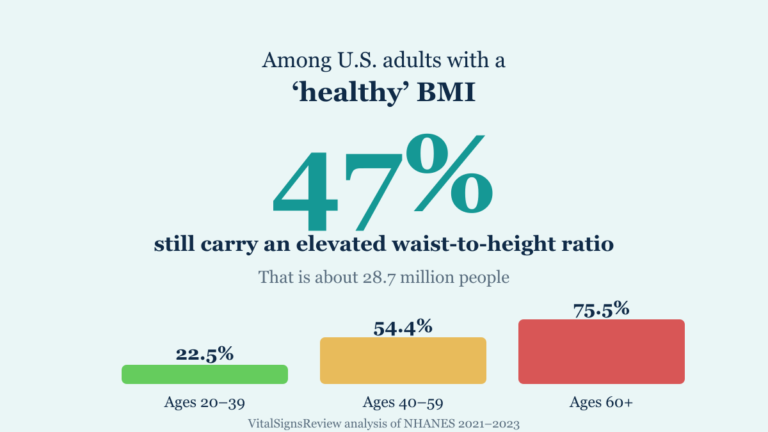
If you recently started resistance training, the scale is a poor instrument for what is happening. Muscle gain can offset fat loss almost exactly for weeks — and this is a good outcome badly measured.
The tell: clothes fit differently, strength is rising, photos look different, but the number will not move. Track your waist alongside weight, because it captures what the scale hides (why muscle decides).
6. Sleep and stress
Short sleep raises ghrelin, lowers leptin, increases the appeal of energy-dense food and reduces next-day movement. The effect is large enough to change body weight on its own — losing roughly 80 minutes a night was sufficient in a controlled study (here’s why).
Chronic stress works through appetite and eating behavior more than through cortisol directly (what actually works). If your diet is sound and nothing is moving, look here before restricting further — start with the sleep guide.
7. Weekends undo weekdays
Five disciplined days and two loose ones can average out to maintenance. A 500-calorie daily deficit across five days is 2,500 — comfortably erased by two days of a 1,250-calorie surplus, which is easier to reach than most people believe once alcohol is involved.
Alcohol deserves its own mention: it is calorie-dense, produces no fullness, and reliably loosens food decisions afterward.
8. You are closer to your body’s defended range
The leaner you get, the harder each additional pound becomes, and the strength of the resistance increases. Someone with 40 pounds to lose has an easier path than someone chasing the last five. If you have already lost a substantial amount and progress has slowed, that is expected physiology rather than a sign that something broke.
9. Medications and medical causes
Several common medications cause weight gain or block loss: some antidepressants, antipsychotics, corticosteroids, beta blockers, certain contraceptives, insulin and sulfonylureas. If your weight changed after starting something new, raise it with your prescriber rather than assuming it is behavioral.
Medically, an underactive thyroid genuinely lowers metabolic rate but rarely arrives alone — fatigue, cold intolerance, dry skin and constipation typically come with it, and a TSH test settles it. PCOS affects insulin sensitivity and makes loss harder in women. Menopause redistributes fat and reduces muscle mass. Cushing’s syndrome is rare and has a distinctive presentation.
How to diagnose your own stall
Work through it in order. Weigh and log everything for one week without changing anything — that alone identifies the problem for most people. Check whether your weekly averages have genuinely been flat for three or more weeks. Measure your waist. Count your actual weekly deficit including weekends. Review your sleep. Review your medication list.
If after all of that you are eating a well-measured deficit for six weeks with no change in weight or waist, that is the point at which a medical explanation becomes worth investigating — not before.
When to see a doctor
Book an appointment if you have been at a genuine, well-measured deficit for six or more weeks with no change in weight or waist; if weight gain comes with fatigue, cold intolerance, constipation or hair thinning; if it began after starting a medication; or if you have irregular periods, excess hair growth or acne, which may point to PCOS. Also seek help if food and weight have become a source of persistent anxiety or if you find yourself restricting severely and then losing control — that pattern is treatable and worth naming.
The honest bottom line
Most stalls are one of three things: not enough time, more food than you think, or a deficit erased by weekends and eaten-back exercise calories. Those are measurement problems, and measuring properly for one week solves them. Sleep, muscle gain and a defended weight range explain most of the rest. A genuinely medical cause is real but uncommon — and worth investigating only after six consistent, well-measured weeks, not after ten frustrating days.
Frequently asked questions
Why am I not losing weight even in a calorie deficit?
Often you're not in as big a deficit as you think — hidden calories in drinks, oils, and tastes add up, and people commonly underestimate intake. Water retention and muscle gain can also mask fat loss on the scale.
Can you lose fat and gain muscle at the same time?
Yes, especially when starting strength training. The scale can stay flat while your body composition improves — which is why measurements and how clothes fit matter more than weight alone.
Why did my weight loss stall after a few weeks?
Partly metabolic adaptation: as you lose weight, your body burns fewer calories, shrinking the deficit. Plateaus are normal and usually break with patience or small adjustments.